We are pleased to share Manny’s Musings, a preview of the program notes for our upcoming concert, Midnight, Finland, and the Movies. BSO Concertmaster Michael Sutton will be the featured soloist for this performance on Sunday, November 22, 2026.
Violin Concerto in D Minor, Op. 47
Jean Sibelius (1865-1957)
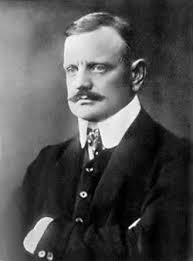
Jean Sibelius, composer
One cannot speak about Jean Sibelius without recognizing he was a man of dichotomies and contradictions. Although he is regarded as nothing less than a hero of Finnish national music, he came from a Swedish-speaking family and was introduced to Finnish language and folklore later in life. Sibelius grew to become the musical voice of a nation seeking its cultural identity. Even though he ached to become a concert violinist, fate took a hand and saw to it that his strength as a composer superseded his abilities as an instrumental soloist. While it was a disappointment for him, we the listening public, have given thanks for the providential act, which gave fruit to his symphonies and tone poems, as well as works for voice and chamber ensembles. Furthermore, while given to dark moods rising from self-doubt, periods of empty pockets and heavy drinking, he managed to write soul-stirring and optimistic pieces of music that served to inspire the masses of Finns and others who desperately needed his voice.
The Concerto for Violin and Orchestra was composed in 1903-04 and substantially revised in 1905. It should have been nicknamed “The Vicarious” because it reflects both the composer’s admiration for virtuoso violin playing as well as his mature symphonic instincts. I can’t imagine Sibelius didn’t sometimes eat his heart out to be listening rather than playing. At any rate, the concerto was originally intended for the celebrated German violinist Willy Burmester, a former student of Joseph Joachim. Sibelius dedicated the work to Burmester and expected him to premiere it in Berlin. Financial circumstances, however, led Sibelius to schedule an earlier performance in Helsinki. Burmester could not attend, and the solo part fell to Viktor Nováček, a capable teacher but not a virtuoso of Burmester’s stature. The premiere proved disappointing. Critics found fault with the work, and the immense technical challenges overwhelmed the performance. Not to worry, as Sibelius responded by extensively revising the concerto, which was premiered in Berlin in 1905 with Richard Strauss conducting and Karel Halíř as soloist. The work was eventually dedicated to the young Hungarian prodigy Ferenc von Vecsey.
The first movement opens in a misty northern landscape, the solo violin seeming to emerge from the orchestral texture rather than dominate it. The expansive second movement sings with an almost operatic lyricism, while the finale charges forward with the relentless energy supported by timpani and celli. One critic famously described its rhythm as a “polonaise for polar bears,” an image that still captures its rugged power. Today, the Sibelius Concerto stands as one of the most beloved and formidable challenges in the violin repertoire, a work where virtuosity serves not display alone, but profound musical expression, ebbing as it might be, for the moment.