This Musicians’ Musings features Emily Anderson. Emily is one of 73 member musicians who play in the Bloomington Symphony Orchestra for the love of music. Each musician brings their time, talents, and treasures to the BSO, and every person has unique experiences and gifts that they offer to the orchestra. Over the course of the year, we’re telling their stories. We invite you to learn more about the musicians you see onstage at every BSO concert.
What is your name? What do you play? And how long have you been in the BSO?
My name is Emily Anderson, I play in the Violin 2 section, and I’ve been with the BSO since 2019.
What do you do in the rest of your life?
I teach 4th and 5th grade orchestra up in Mounds View. I like to garden and read, and I do pottery.

Pitcher and cup by Emily Anderson
How long have you been a teacher?
This will be my 16th year.
You said that you’re a potter, and I’ve seen your photos online, which is why I was interested in talking to you. When did you start doing pottery?
I also started right around 2019. I did a little bit in high school, but nothing formal. And then 2019, I was looking for a new hobby, something fresh that I hadn’t done before. And I started at our local pottery studio in Eagan.
Tell me more about what inspired the action to try something new? And why pottery?
My job is teaching orchestra all day long, and so there’s a lot of bleed-through with orchestra as a hobby as well. I was looking for something that was just for me, where I didn’t have to be a leader, I didn’t have to be in charge, I could just be. I was interested in pottery because I like working with my hands, being physical, and doing something productive, where I can see results right away.
What do you find challenging or rewarding about pottery?
I like that you can think about your like physical movement and then direct that energy into the clay and see that happen in real time. It’s similar to violin, where you think about your physical action but when you see the result of that energy going into the clay. I think it was rewarding, because once I saw a lot of the cause and effect of concepts, like, “this hand shape causes this to happen in the clay,” or “this much force into the clay causes this to happen,” it was a very logical response. It was like violin, where you see an immediate result of what you’re physically doing, so you can build from there, and that’s exciting.
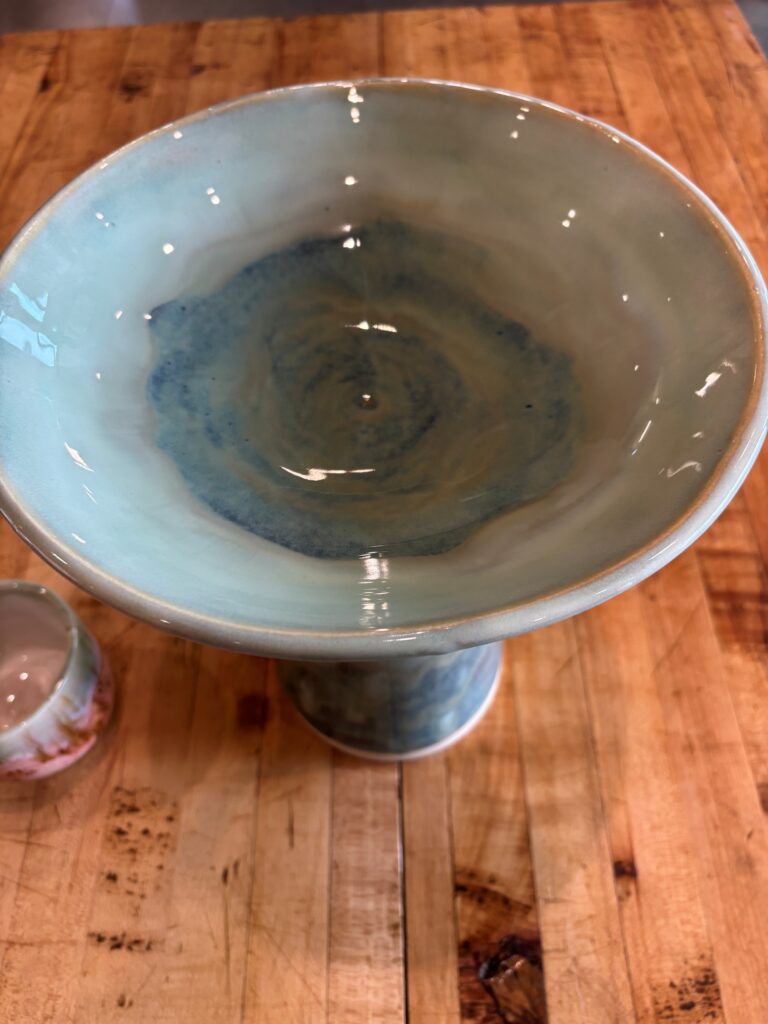
The inside of the bowl; Pottery by Emily Anderson
The connection between violin and pottery is so cool. Did you tie those things together as you were learning pottery techniques?
Yeah, I do think it happened pretty early on. I had a really, really good pottery teacher, maybe the second year, and she had an education background. I remember it felt like my violin studio in college, because she would sit down and she would show you what you’re going to do. And then she would sit and watch you throw on the wheel, and she would give critiques and subtle adjustments. And I remember for some people it was really foreign or uncomfortable. They didn’t know how to respond to those things and make those changes. And I was like, “Oh, this is the violin. I have been in this situation before, where I have a teacher telling me what to do, and then you try those things, and you move on.” It translated easily for me to understand what kind of things worked and what things didn’t, and then go from there. It was exciting because it felt very comfortable to take that criticism and run with it, to make progress more quickly. It felt very similar to violin and teaching. I was like, “Oh, I know this world.”
Do you have favorite pieces that you like to create?
I like creating things that have a lot of movement, so things like a vase with a wide belly and a really narrow neck. I like altered forms. That’s where you throw something on the wheel and you have a basic shape. And then you can either cut into it, or you can pull that shape into other forms. You start with something basic like a cylinder, or a cup, or a bowl, and then you alter it from there to create something new.
Let’s pivot a little bit. What do you enjoy about playing in the BSO?
I like that I can just focus on the music and my playing and I don’t have to be in charge of anyone else. I can be a little selfish about playing things I love, and playing with people that I’ve become friends with. It’s become a really good social outlet for me. It’s fulfilling because I play orchestra things all day long and my standards are high. I do it for a job, and so I’m not gonna be happy doing something that doesn’t sound good, or playing pieces that aren’t challenging. And I love the BSO because I really get those challenges, and I get to play a lot of music that I love. We have played some of my favorite symphonies already, like Tchaikovsky 4. I’ve wanted to play this forever!

A pitcher and cup by Emily Anderson
You have a very busy life. What compels you to prioritize pottery and participating in the BSO any other things that you do? I’m curious about what inspires people to spend their time with us and contribute your treasures and your talents.
I think it’s not always the case. It’s hard to be consistent. There are times when it plateaus and there are times when it’s a harder ask. For instance, at the beginning of the school year, and I’m exhausted, I’m like, “This is a big commitment when I have very little free time.” You forget about those harder pushes to practice, and you use free time you don’t really have. But when you have that concert, or that really good rehearsal, you get that little zing where you’re like, “Ooh, that sounded really great, we played really, really well. There are also those connections that you don’t expect, like having a friend play with you, or playing with Manny who has tons of stories and connections and things.
There are all these little rewards on the way that you can’t plan and you can’t really anticipate until it’s happening. And I think that keeps you wanting more because you are always experiencing something new, something challenging, something fun. For me, my job is really hard and it’s really time consuming. And even though it [the BSO] is time and energy, it really fills my cup. I feel more energized, and even though it takes time, I feel like I have more time to just enjoy. It’s rewarding, even though there’s a lot of time spent on it. You can look back and say, “I made that, or I played that, or I accomplished this thing,” and that always feels good.
You mentioned Tchaik 4 being a highlight for you. Do you have any other highlights of your time from the BSO?
You know, I actually loved the most recent concert [July 21st’s Arts in the Park]; all the jazz music. I love branching out there, and our soloist was phenomenal! It felt very cohesive, and like everyone had a great time. All the musicians were really locked in. It was great.
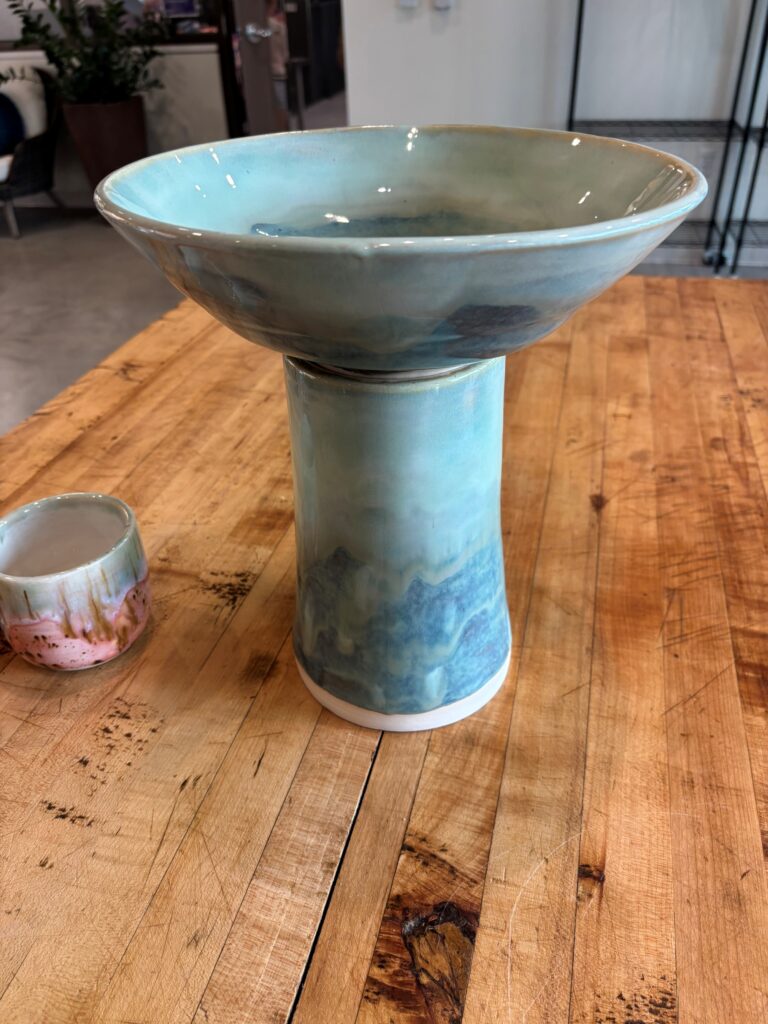
A wide bowl on a narrow stand sits on a wooden table
What piece would you recommend to someone who is exploring classical music for the first time?
Ooh, that’s a big question. Hmmm…I am a huge Tchaikovsky fan, so I would maybe say Tchaikovsky’s first piano concerto. And I would say that because it’s big and bold and unexpected and romantic. It’s all these things, and then when you learn about the piece, Tchaikovsky’s teacher hated it. He didn’t like it! He thought it was a horrible piece that should have never been written. I think it’s funny because I love that piece for its unexpectedness. And I think people don’t really always know that about classical music, because it’s not still, and it’s not boring. There are people who are challenging what to expect. Even in the 1800s with Tchaikovsky, he wrote something his own teacher didn’t like!
Are there any kinds of other genres of music that you enjoy listening to?
I really love folk music and bluegrass, so Sara Jarosz, The Highwomen. I love things that really feature more of an acoustic sound where I can really hear hat the artist is doing. I’m really into indie, Andrew Bird, things like that.